Thursday, June 9, 2011

Arundel Castle and Colchester Oyster Fayre

A busy week last week and one that took me from the Bishop's Palace in Wells, to Christchurch Mansion House in Ipswich and then onto Arundel Castle in West Sussex.


The Yarnsmith
In the original early medieval keep at Arundel

Arundel is a huge castle with lots of history and like all major fortifications it has suffered over the years and also been restored and added to many, many times. It's that that still stands out about the place, for having just arrived and set up with my storytelling apprentice Kim, we decided to have an explore before I started telling and we stumbled upon a what I can only describe as a fantasy garden.


Oberon's Palace based on Inigo Jones 17th century design

For it turns out that the present owners (Still the Duke and Duchess of Norfolk) are still adding to the castle and it's estates and this new garden was inspired by the work of the famous early modern architect and stage designer, Inigo Jones and taken from a painting inside the main house.


Looking into the Oberon's Palace

Jones was well known for his innovative theatrical designs and clever inventions & effects, many used at court masques. This is reflected in the center piece of the garden - Oberon's Palace which was designed for Prince Henry's Masque in 1611 (Henry was the elder brother of Charles the 1st, but died whilst still a youth) And inside a crown neatly balancing on top of a fountain, which spins and bounces and bobs, but does not fall off.


The crown balancing on top of the fountain In Oberon's Palace

In that respect then the recreation of Jones design is fantastical, for just as some today might look down their noses at special effects, there were those who did the very same some 400 years ago. Ben Johnson, who wrote many of the masques that Jones designed stage sets for, regularly mocked Jones work saying that the literature was more important to theatre than the sets. Alas for Johnson there were many who disagreed and came to see Jones stunning effects, which must have galled Johnson no end!


Looking up in Oberon's Palace

I would have been one of those coming to see what wonders Jones came up with next and for me the fact that I first thought the garden at Arundel was a fantasy garden was not then a criticism. . I thought it was fantastic! A stunning recreation of the work of a creative genius of 400 years ago.


Detail of the main arch of Oberon's Palace


Another of Inigo Jones designs - the Park Temple


Inside the Park Temple


Part of huge Inigo Jones garden

Having told at Arundel on the Thursday I then went back to Ipswich on the Friday and in the evening I continued my storytelling journey onto the Colchester Oyster Fayre. The Oyster Fayer is my favorite historical fair in the whole country and anyone wanting to buy authentically made goods, from shoes to swords, to horn cups and phallic pewter badges, they would best be served by coming to the Oyster Fayre.

For me though it's the entertainment that really stands out and not just because I'm part of it! And this Year it was Melford hys Companie who really entertained one and all. They are part of the now famous living history group who have their base at Kentwell Hall in Suffolk. There are many offshoots and individuals who started at Kentwell and like the Melford players now travel all over the country to schools, museums and heritage sites, demonstrating and entertaining.


The cast of the St George mummers play including the Devil himself and a dragon with real smoke!

The Melfords put on mummers and other plays as they would have been in medieval and Tudor times - all very colorful, bawdy and with lots of interaction with the audience and crowd participation. This year they performed the St George mummers play which even featured a smoking dragon and the kids helping the quack Dr pull out George's guts! Jack Green who as 'Dr John Green' featured in an earlier blog on Nottingham Robin Hood Pageant that can be seen by going here... He played the 'evil' Saracen


Jack Green as the 'evil' Saracen


The boastful Dr of Physic attempting to cure St George


Kill or cure, with the help of some kids!


Finally out come his guts or is it sausages!

They then went on to perform the Reeve's Tale from Chaucer about two lusty students who get one over on a greedy miller. The tale is a bawdy one already, but Jack addedan extra earthy feel by playing a Chaucer type narrator who had to be dragged off stage for getting carried away with the dirty bits!


A case of mistaken identities and mixed up beds in the miller's mill From Chaucer's Reeves Tale


Jack Green again as a very bawdy Chaucer
Being dragged off before he went too far!


And finally they performed Chanticleer, inspired by Chaucer again and that involved everyone in the crowd being animals and giving chase to Reynard the fox when he took hold of Chanticleer the Cockerel. I really enjoyed the plays as did the huge crowds they drew in. From tiny kids to old people - everyone got the stories and jokes, which is something modern theatre could do with taking note of!


Chanticleer the Cockerel strutting his stuff!


Perching with his beautiful hens


Giving chase to Reynard the fox who has Chanticleer in his clutches
Even the audience joined the pursuit!


Thanks To Paul Ullson for inviting me to Arundel and Ted Loyde at the Oyster Fayre..

Tuesday, May 31, 2011

Christchurch Mansion, Ipswich

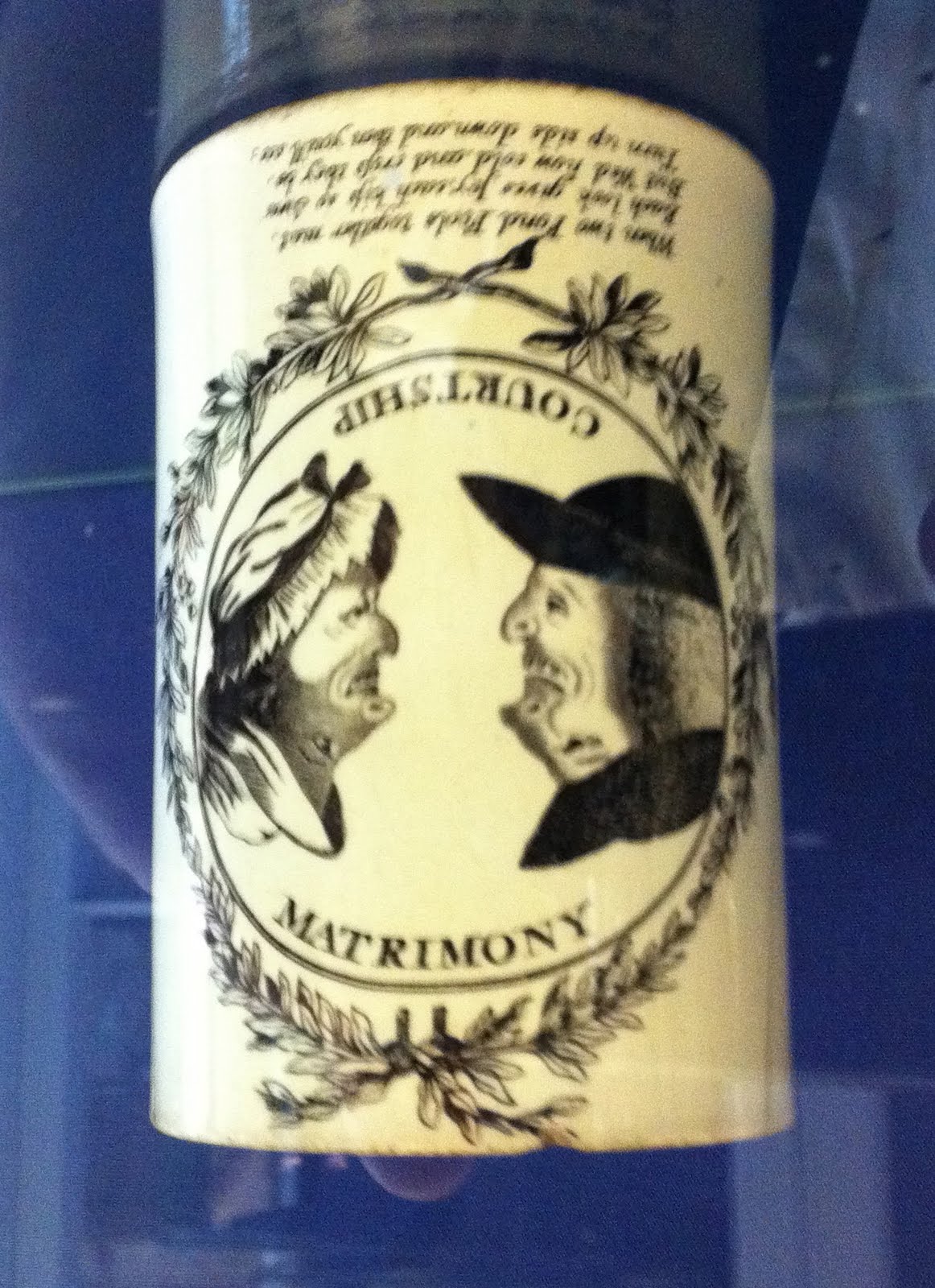
This week I am telling in the wonderful Christchurch Mansion in Ipswich. Originally a Tudor hall it grew and developed as fashions changed and it is now a museum and gallery full of twists and turns, nooks and crannies, step ups and step downs and creaking floor boards. Lots of creaking floorboards! It is packed full of fantastic furniture stained with the dark hues of everyday use and touch. There are little rooms here and there, austere Tudor and Stuart portraits, their occupants sitting in judgement on all the meaner sort like me who pass by. There are all sorts and sizes of room, from rich men's closets to the scullery and kitchen where the meaner sort like me once turned spits and fetched water. It's a labyrinth because as fashions and tastes changed the house grew and in later times furniture and even whole building from elsewhere in Ipswich were absorbed into the structure. There is too much there to describe, from Georgian costume to Tudor bed warmers and cucking stools and so I have decided to focus on one object that caught my eye....

The joy of courtship...
Click on image to make larger

It's this small jug made in the late 18th century in the ceramics collection and it's subject reflects a major theme of many of the stories I tell. In truth I'm not really into ceramics, but this jug had a certain appeal because of my stories, namely the struggles between man and woman, husband and wife. Occasionally I have been challenged for telling such tales, but historically the subject had been a constant cause of both concern and jocularity. Clearly that's the case with the jug, for as it says...

When two fond fools together meet
Each look gives joy, each kiss as sweet
But Wed, how cold and cross they be
Turn upside down and then you'll see...

And then when you turn it upside down the message is complete!

The realities of Matrimony!


This is not an attack on men nor women, but simply a joke that makes people laugh and so hopefully lessens tension between men and women, husband and wife. Surely we all need a laugh every now and then!

Thanks to Caroline and all the staff and volunteers at the mansion house for looking after me so well and being so into storytelling!

Thursday, May 12, 2011

Celtic Harmony, Hertfordshire

On May 2nd this year I told at a Beltane Celebration at Celtic Harmony Camp. It's a mix of Iron Age round houses and technology but overlaid with messages about the environment and sustainability. In essence using our Celtic heritage to promote harmony with the natural world, whilst providing natural & cultural heritage education.


One of two roundhouses at Celtic Harmony
Click on any image to make larger...


Inside and looking up at the smoke blackened roof of the roundhouse


The organic looking Iron Age roof

It was this that particularly attracted me to the site. Having worked recently at Center Parcs at Elveden in Norfolk where the access to nature is limited for the most part to cycling or walking through it, I have to be honest and say that the Celtic Harmony approach is much more hands on and I think better for it. That's not to say there is anything wrong with the center parcs approach - it does after all get people out and about who might not otherwise have access to nature; it's just that I like to see both kids and adults getting their hands dirty. That's precisely what happens at the camp, because at least one of its founders, Luca, is trained as a Forest School teacher where the emphasis is on positive learning through access to nature but also importantly through fun. And there can be no greater fun as far as I'm concerned that messing about with mud! One of the activities when I was there was creating Green man Clay faces at the mud pit and plastering them to a nearby tree.


Earth and water make mud and mud is fun!


The finished product -
Green Men al waiting to finally banish winter...

Its not just about nature though, because the hands on activities also include more historical sessions such as grinding grain to make flour and simple forms of bread and cakes. This was taking place in one of the roundhouses where anyone who wanted to could grind their own flour, make a simple 'cake and cook it over the fires. The smell of both smoke and cake was great and it was good to see that nothing was fenced off. Everyone was getting involved, getting their sleeves rolled up and using their own common sense!


The grindstones kept turning all day...


Cooking the cakes in the roundhouse

It was good to see, because like many people I sometimes worry that kids and adults for that matter are becoming detached for the world around them and that convience rules, especially when it comes to food. And at Celtic Harmony the message is clear that the animals had their many uses including meat. Its not forced down your throat, but its clear that the animals here were not just pets.


Messages about our Celtic past and sustainability are dotted here and there...


A Goat!


The emphasis was on fun and so hopefully learning by the back door. Even the ceremony at the end of the day where Queen Winter was banished by the May Queen and the Green Man, involved lots of shouting and audience participation and I think that it's precisely that pantomime element that will make everyone remember what happened and maybe take away just a little bit of a 'feel' for life long, long ago..


The May Queen (Middle) banishes Cruel Winter (Left)
with the help of the Celtic Harmony Chieftain and many, many kids!


Thanks to Luca and Clare and to the storyteller Molly for making me feel so welcome...

Monday, April 11, 2011

Oundle, Northamptonshire

Last Friday I was lucky enough to be one of six tellers telling 'Taster Tales' at the annual Society for Storytelling Gathering, which this year was held in the market town of Oundle at the Independent School.

Any town can I suppose call itself 'historic' by virtue of being around for some time, but in the case of Oundle it's a certainty! Its market is ancient; over a thousand years old and so pre dates the conquest, and many of its buildings are medieval. Historic it is, but also the town has a slightly surreal air about it. It's like a mini Oxford or Cambridge, but with a village filling in the gaps between the school buildings and I found it hard to see where the independent school ended and the village began.

The outside of Oundle School Great Hall

The place is truly confusing, because even buildings that appear at first glance to be ancient are in fact relatively new. Not least the Great Hall of the school where we were telling, that looked for all like a medieval structure, but as the dedication out side shows, it wasn't built until 1907-08, although the Grocers Company Shield also adds to the feeling of ancient history and demonstrate the towns close links to its past. It also serves as a reminder that the Grammer school was re-founded and endowed in 1556 by Sir William Laxton, Master of the Worshipful Company of Grocers and Lord Mayor of London.

Great Hall Dedication Stone


Grocers Company Shield (On the left)

An ancient town then steeped in history, but when I went for a walk late on the Saturday, the young had taken over as they do everywhere and it could have been the club laden riverside area of Norwich I was passing through. There is also a definite feeling of 'town and gown' that you get in a University City like Oxford, for when I was looking around on Friday I met a woman who suggested that I would be far better off spending the evening at the local Ship pub than hanging about at the school! I met her and some of her friends on Saturday and they were all very interested in the storytelling weekend, so its certainly a friendly, if some what disconcerting place!

Inside the Great Hall where some fantastic tales were told


The roof of the Great Hall

Sunday, February 27, 2011

Barley Hall, York

Saturday last I was telling in Barley Hall in York . Hidden down a tiny alley between Stonegate and Swinegate and a mere stones throw from York Minster, it is a reconstructed and renovated Medieval Hall that is a veritable sweetshop of sensory delights. I particularly like it because I'm as interested in those whose hard work raised up these great structures and their skills that made rich men's dreams of immortality a reality.

And so I was like a kid in a sweetshop at the hall, because it has been rebuilt using ancient skills and techniques. It is also softly lit with low light, some horn windows & scented candles, and decorated with the flowers, herbs, and spices that made up the medicines so important to the cunning woman's craft long, long ago, it intoxicates the senses and transports the visitor back to times past.


But it is in its construction that I took most pleasure; enjoying the honey coloured rough hewn timbers that have yet to take on the dark hues of everyday use and touch. To run your fingers over the minute undulations of hill and valley created by the carpenter's adze, whether they be formed 700 or just 7 years ago, it really gives you a 'feel' for beautiful buildings and the sheer skill and effort that went into creating them. I wrote on my last post about Dragon Hall in Norwich, which is also a rebuilt and renovated medieval building, that I don't much like reconstruction's that are 'fixed' in one time period, but I do have to make an exception for Barley Hall. It really does give you a small window through which to look into life in a rich man's town house long ago. That said, because the place is run by the York Archaeological Trust, there are plenty of great exhibits that do for example look at death, disease and medicine in York as well as crime and punishment in medieval times. Barley Hall is very like Dragon Hall in many ways. Both share a similar history with once great houses being sub divided and hidden behind later alterations, only to be rediscovered late last century. And like Dragon Hall there is a nod to the modern at Barley Hall, with a floor to ceiling window that separates the main hall from the passageway outside, allowing even the passer by intent on shopping in the nearby 'Shambles' or on the market, at least a brief insight into the life of the medieval elite!


Looking in on the main Hall from the covered alley outside

Thanks to Chris Tuckley of the York Archological Trust for giving me the chance to tell in this beautiful building and also Stuart and Gemma who looked after me on the day....

Saturday, February 19, 2011

Here be Dragons! The Guildhall & Dragon Hall, Norwich

Last week I was telling at Dragon Hall in Norwich and the Norwich Guildhall and all of it part of the Norwich Dragon Festival in association with Ghent.


Dragon Hall, Norwich


Norwich Guildhall

Norwich is a City steeped in dragons and both these buildings have a strong link to them and the St Gorges Guild that inspired much of the monstrous symbolism in and around Norwich. They are also two of the oldest buildings left in Norwich and both date back to the fifteenth century. Dragon Hall which was built as a merchant's house and shop in the 1400s by Robert Topps, a merchant with strong links to both Norwich and London, although apparently its heyday was short and after Toppe's death in 1467 the hall was divided up. Over a very short time the magnificent roof beams and the carved dragon spandrel (Which gives the hall its name) were hidden and by the nineteenth century buried beneath numerous partitions and false walls that made up a maze of very poor quality housing.


Toppe's 'Crown Post Roof'
A serious case of 15th century showing off!


The Dragon Spandrel, which gives the hall its name


Toppe's Hall with dragon spandrel top left of the picture
Awaiting cubs and scouts who having a sleepover at the hall.

It did at least protect the medieval building until it was exposed again in the 19702 and 80s. Its a restoration project that continues on to this day with the reconstruction and repair of both internal and external features. And what I really like is that the building is continuing to evolve. The worse thing that they could have done was try and 'fix' the building in one particular time period; ignoring all those later phases of pub, shop and poor housing and also ignoring its continuing use into the 21st century. Luckily they did not do that and the building also has a very modern new wing to cater for schools and other events and also a very modern glass gallery at the back of the property which is a beautiful thing in its own right and allows people outside to see the fantastic original wooden arches that help support the great hall.


The 21st century glass walkway at the back of the 15th century hall


Inside the glass paneled walkway

Some people may not approve of this mix of old and new, but I bet you anything you like that Robert Toppes would have marveled at it. He came from a time when glass was hard to produce in any great size and quantity and was an expensive status symbol. Just think what he would have thought of glass panels that reached from floor to ceiling, I feel certain he would have been willing to spend much of his fortune on such a thing and the carved dragon spandrels, well they would have been old news!

The Guildhall also has a carved dragon as one of the bench ends of the Mayor's throne and Alderman's seating in the Council Chamber, otherwise known as the Mayor's Court where many a petty crime of 'ill rule' and 'evil behaviour' was dealt with and to find out more about these crimes , the people who committed them and their punishments, just click here...

The Guildhall Council Chamber & Mayor's Court


Detail of the late medieval/early 16th century Mayor's and Alderman's seating


Carved dragon bench end in Mayors Court


Unfortunately I couldn't tell in the Council Chamber because of ongoing restoration and repairs, and so I told in the Assembly Chamber where the Councilmen of Norwich met and also was the room where the Sheriffs Court took place (There were many courts in Norwich as everyone wanted their fair share of the fines handed out!)


The Assembly Chamber

The Guildhall was built on the site of an earlier Norman tollhouse from where the early market place was administered . The Guildhall itself was built in the early 1400s in recognition of the Charter that made Norwich self governing and replaced the Kings Bailiffs with Mayor, two Sheriffs and Alderman. These men were typically rich merchants and also members of the Guild of St George and prior to the reformation they would celebrate St Georges day by processing about the City with a St George and 'Snap' dragon who made battle. And whilst St George didn't survive the reformation Norwich Snap did as part of the annual Mayor Making celebrations, thus ensuring the close connection between the City and dragons! The Guildhall was then a perfect place for telling tales of the 'Dickfools' who led Norwich Snap about the City and also tales of Death and the Nature of Women. Certainly they knew the nature of women well enough in the Mayor's Court, for one of their main preoccupations trying to control it!


Stairs leading down to undercrofts (storage and prison cells)
Also parts of earlier Norman Tollhouse


An eighteenth century version of the Norwich 'Snap" dragon


Another carved dragon
In the Erpingham Gate that leads into the Cathedral


St Margaret (The patron saint of women in childbirth) bursting out of a dragon
St Helen's Church at the Great Hospital, Norwich


Early 16th century St George mural at St Gregory's church, Norwich


Thanks to Sarah at Dragon Hall for the hot dogs and letting me tell there, and both Laura and Sophie of Norwich 'HEART' for all the work at the Guildhall.

Friday, February 4, 2011

Joules Yard, Market Harborough

Last night I went and told a tale at Kevin Walker’s Yard of Tales storytelling club at Joules Yard in Market Harborough. As part of National Storytelling Week Kevin opened up the floor to ten or so storytellers - professionals, club members and beginners and what a great mix it was. I have to admit that I have avoided storytelling clubs till now and concentrated on telling to those outside the typical storytelling audience. But a change is as good as a rest and to be honest it’s always good to tell to an audience who know what to expect and who don’t assume it’s all ‘once upon a time’!

The club is held at the back of Joules Yard - which boasts a restaurant, an antiques centre a garden center and even a laundry service which means that there is something for most people! It also regularly hosts folk and acoustic evenings as well as Kevin’s monthly storytelling club. The club itself takes place in what can only be described as an old outbuilding. I don’t mean that in a bad way, because with the high winds that night coupled with the creaking of timbers and rattling of glass it certainly lent some atmosphere to the whole event. And although it was cold you could get a great big mug of tea (Or alcohol if you wanted) and have some of Kevin's home made cake to take your mind off it!

The night started with Dave Blake, father to the professional storyteller, Jo who was on form with some very dubious, but very funny puns to make for a very different version of the Norwegian tale, The Husband who was to Mind House. There were also a couple of husband and wife couples - Jill & Terry Jobson and Kath & Mike Chalk who all spun very different tales from all over the world and also managed to incorporate some of their own experiences. There was a veteran storyteller, Liza Watts, who has according to Kevin has been telling all over and everywhere for many, many years and she told a story about defeating Death himself (That's my kind of story!) Also Pete Castle a very well known teller and folk musician who had a very relaxed style and completely the opposite to Sophie Snell who was full of energy and took us all on a journey back to the time of pirates, headless corpses and squashed eyeballs. This theme was repeated in Jo Blake’s story which moved from beautiful images of flower petals spilling from a girls mouth, to the scooping out of eyeballs with a spoon - All the ingredients you need for a good story! New storytellers were represented by Tom Phillips, a teacher and budding teller who because it was Chinese New Year, took everyone back to ancient China with a moral tale of greed and magic choppers! There were as many different styles and energies as there were storytellers and it was good for me to see just how other tellers ply their trade.

As for Market Harborough itself, well I saw very little, because I went straight to the club and it was late when I came out and had to drive back to Norwich. It was also very cold and windy and not a night for standing about too long outside. I did however pass this amazing building with a date of 1608? on it, although I suspect parts of it are much older...


Market Harborough Guildhall/Tollhouse or was it a Grammar School?

I assume it’s the old Guildhall cum Tollhouse where the market and maybe the whole of Market Harborough was regulated from? As the history page on the Joules Yard website says.. Market Harborough was founded specifically with trade in mind, so a tollhouse would have been a necessary part of that plan. I shall hopefully be telling at the club again one day soon so will go and check it out. One thing's for certain though, it would be a great place to tell some medieval or Tudor tales in!

Thanks to Kevin for the invite and for a very appreciative audience...